FloxHub onboarding
Intro
I designed FloxHub's onboarding, then made Sign in to FloxHub the main call to action (CTA) on flox.dev, five days after marketing asked. Weekly signups rose 116.6% in a before/after readout. The comparison was confounded, and the onboarding flow couldn't have caused the rise directly.
Flox builds reproducible developer environments on Nix.
You use them through the flox CLI, and you can push them to FloxHub, the hosted side.
Leadership watched FloxHub signups every week.
However, flox.dev told people to download the CLI first.
I joined Flox as a product designer in August 2025. Working from an existing requirements doc and persona, I designed the screens and wrote the concept copy.
Team and collaboration
The lead engineer ran the build. Another engineer wrote the most onboarding commits, and a third built default-environment creation. By commit count, I was third of six. I also wrote follow-up PRs and the CTA change.
My stakeholders were our VP of Engineering and Growth, marketing, and our CEO.
The wizard was a Figma handoff, from before I swapped mockups for code prototypes. In January 2026, I prototyped CLI-side onboarding with Claude. That branch never merged.
New-user problem
On my second day, I audited FloxHub as a new user. My first finding was that FloxHub didn't explain what an environment was or why it mattered. The second was that you couldn't download the CLI from FloxHub, even though you need the CLI for most tasks there.
I wanted onboarding to end with an activated environment. On August 7, I suggested "a success indicator in FloxHub after you activate your default environment." However, the CLI had no clean way to tell FloxHub you'd activated. A CLI callback was one option, and I was in favor. The lead engineer judged it "awkward and somewhat impolite," so we didn't build it.
First draft and async review
I shared the first Figma draft on August 8, at the "so early it's kind of embarrassing" stage. I ran the review async.
The docs put the concept two clicks away, so the first step explains environments in plain words. Two CLI engineers reviewed the copy. The cost is a whole step of reading before you touch anything.
Here's that first step as it looks today:
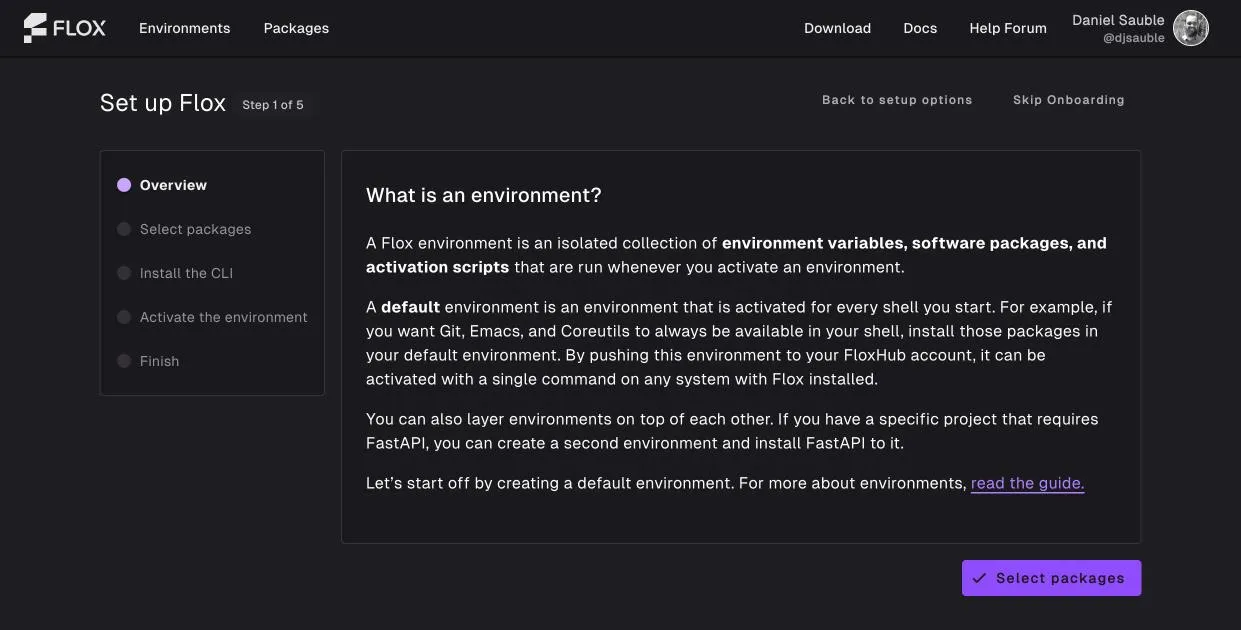
In the built wizard, pressing Back dropped you out of the flow. The lead engineer flagged that kind of edge case in my August review, but I ticketed the flow with questions still open. By late October, it was a known issue.
What counted as done
With no activation signal, "done" came to mean a default environment exists. So I kept Skip on the CLI and activate steps, even though the CLI is essential for most of FloxHub. We measured the step we could see, not the one that matters.
Today the activate step asks you to confirm it yourself:
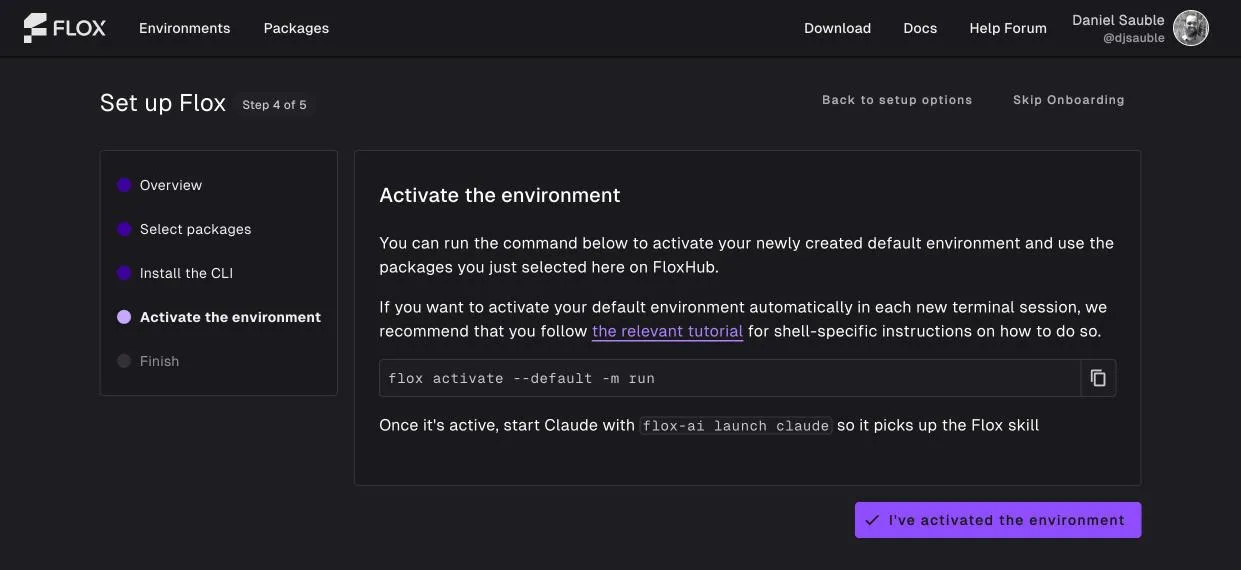
Measurement was thin. Before the build, I listed what to capture, including skips, packages picked, and activation. Step tracking arrived five weeks after launch. Through mid-2026, we still couldn't tell who activated.
Preselected packages
After the September 24 launch, the lead engineer noticed that people weren't picking any packages.
He and one other engineer had floated suggestions.
When he raised it again on October 1, I suspected a "blank sheet of paper" problem.
About 50 minutes later, I opened a one-line change to preselect git, emacs, and coreutils.
The step looks like this today, with a different set of defaults:
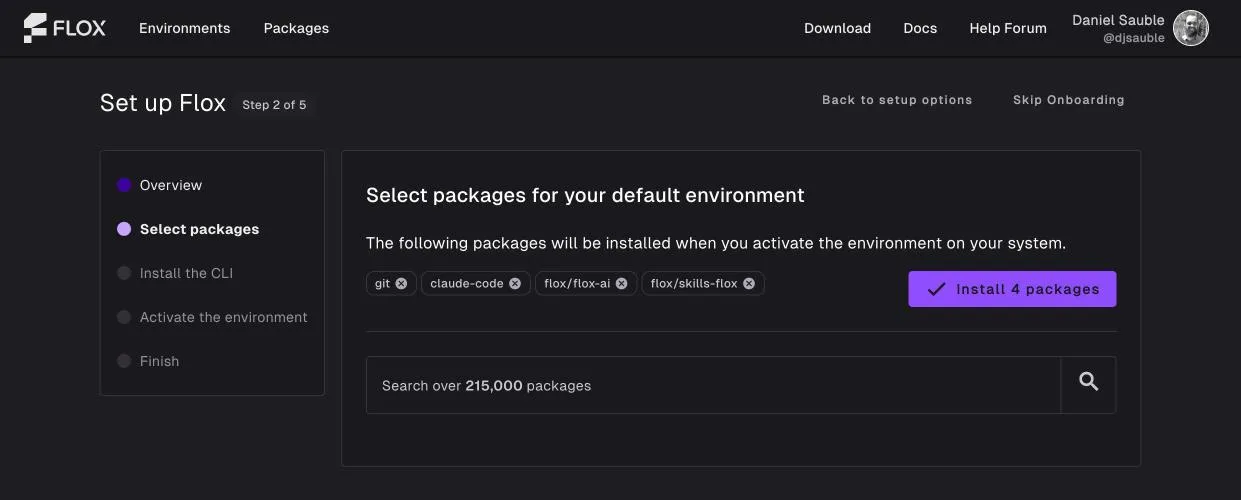
I bet defaults would beat a blank sheet, even though they muddy the signal.
We can't tell who wanted git and who didn't uncheck it.
It also put Emacs in front of every new user, which the lead engineer called "devious" (approvingly).
Early users started editing the defaults (one swapped Emacs for nano and added Python).
We never measured the result beyond anecdotes.
Sign in CTA on flox.dev
The Sign in CTA wasn't my idea. In October, marketing reminded me that Sign in to FloxHub was meant to be the main CTA. That needed a CLI download page in FloxHub, outside onboarding. I had designed it in August, but it never made the build. I built it the same day, then made the website change.
I proposed moving Download to the Resources menu, even though it adds a step for CLI-only visitors. I watched downloads as a counter-metric, and they didn't appear to drop. Our CEO thanked me for "keeping track of the tradeoff."
Here's the flox.dev hero before the change:
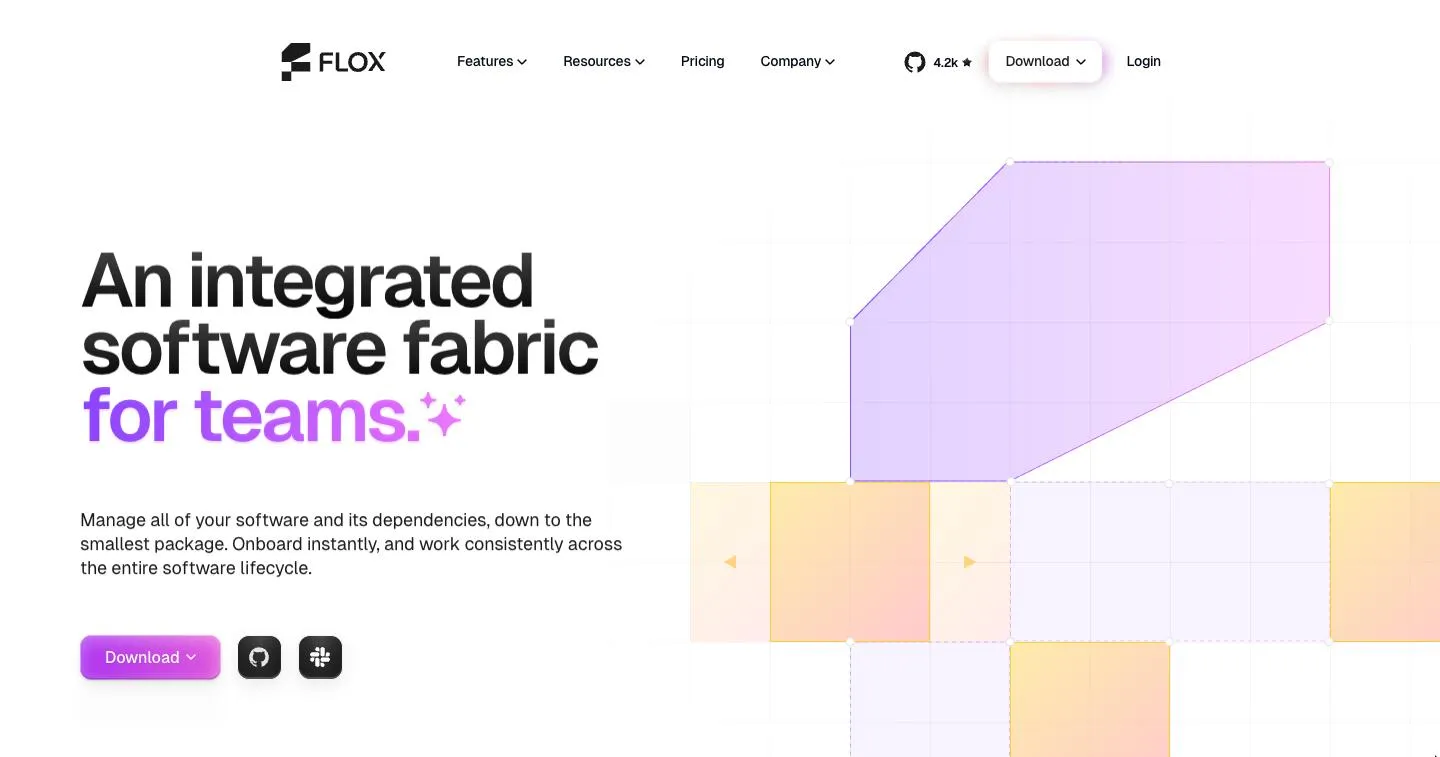
And after, with Sign in to FloxHub as the main button:
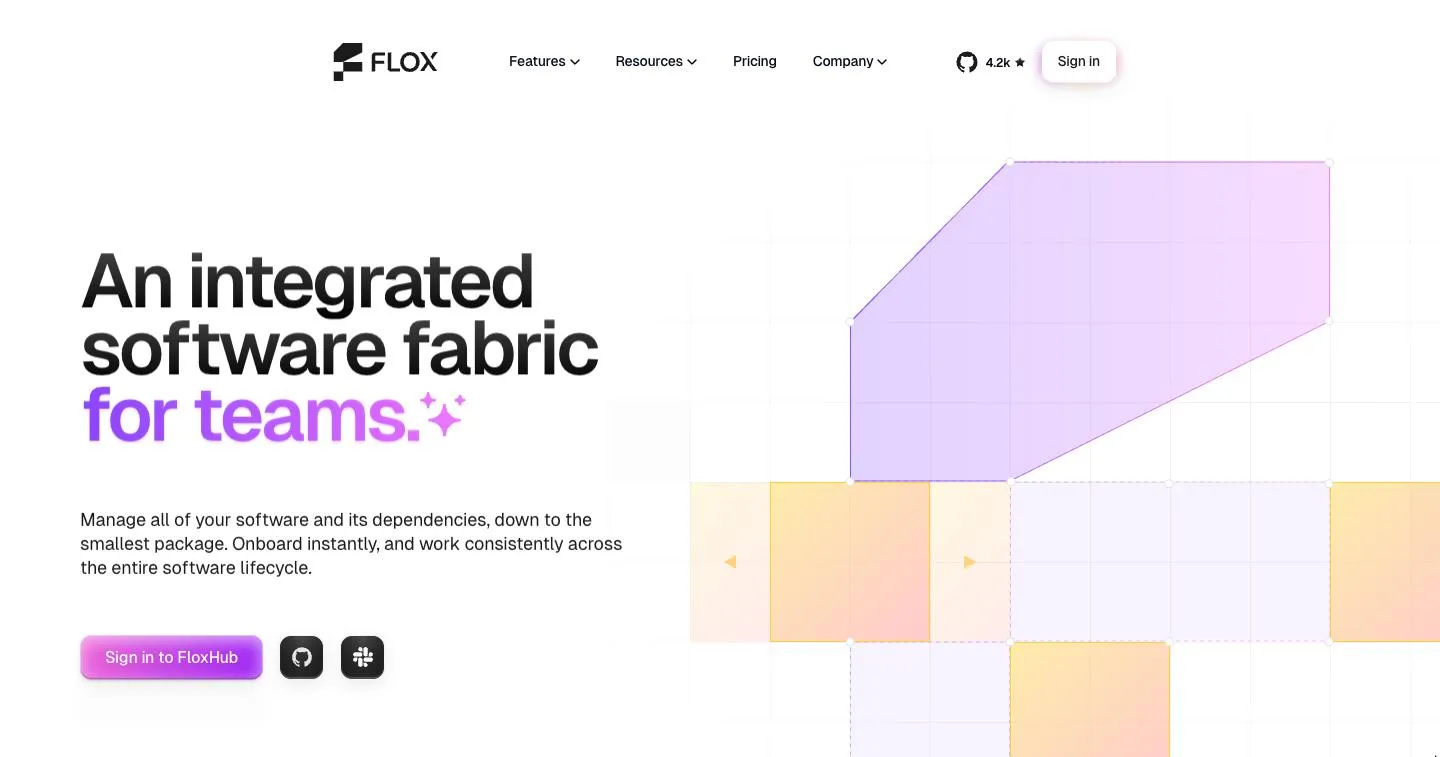
I cut the hero Sign in button in December, leaving mobile homepage visitors without one until February. Claude told me the mobile menu never had one, and the fix went from PR to merge in seven minutes.
Confounded attribution
The wizard couldn't move signups directly, because it runs after signup. Beyond that, attribution is confounded. In October, I wasn't sure the early numbers meant anything yet. A sales colleague noted conference days run higher. The "after" window held GitHub Universe, KubeCon, and a Hacker News front-page post. It also held new signup paths: a Kubernetes page and my AI page. When the readout came out in December, I didn't push on attribution, and I should have.
Outcome
The wizard went live September 24, 2025. The new CTA followed on October 21, five days after marketing asked. The before and after are in the Internet Archive.
In December, our internal readout put average weekly signups over the last 60 days 116.6% above the 60 before. It credited both the CTA and the onboarding flow. It's a before/after, not a test. The "last 60 days" window opens about 11 days before the CTA change, and the baseline includes about two weeks of the wizard.
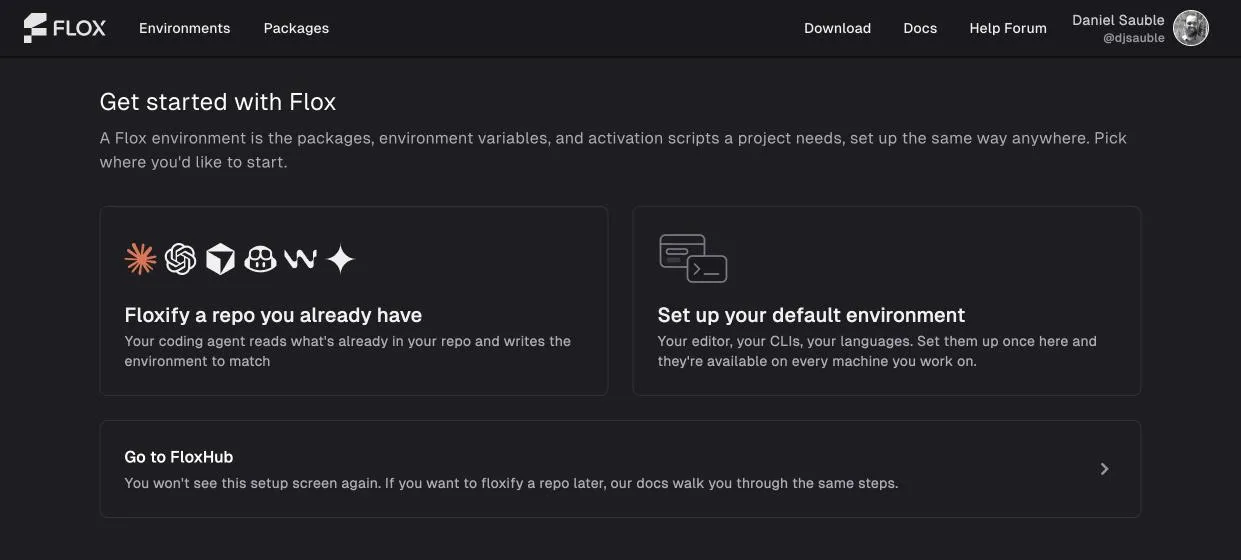
The forced walkthrough didn't last. In September 2026, two teammates made it one of three lanes on a new choice screen. Their PR credits my review for pushing a coding agent onto the first screen.
My biggest lesson was that an unmeasured flow gets credit for numbers it couldn't have moved.